Introduction
When it comes to oral health, receding gums are a more common problem than you might think. Gingival recession, which is what doctors call receding gums, can not only make your smile look bad but also put your oral health at risk. In this detailed guide, we’ll talk about what causes receding gums, what the signs are, and how to treat them so that you can keep your gums healthy and your smile beautiful.
Understanding Receding Gums
What are Receding Gums?
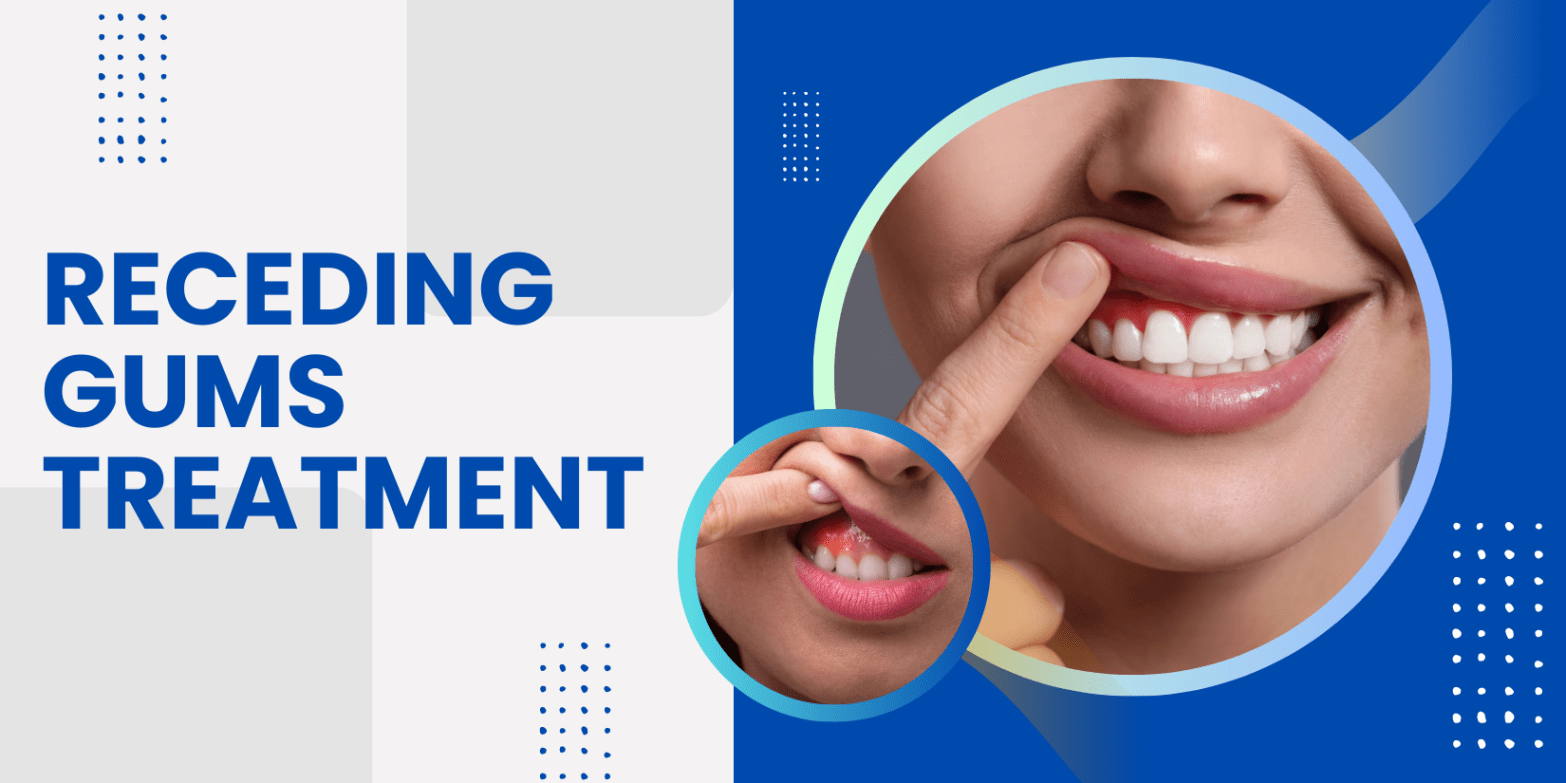
Receding gums refer to the condition where the gum tissue surrounding the teeth gradually pulls back, exposing more of the tooth’s surface or even the tooth’s root. This can lead to sensitivity, pain, and an unappealing aesthetic.
Common Causes of Receding Gums
Poor Oral Hygiene
Insufficient brushing and flossing can allow plaque to build up along the gum line, leading to gum recession.
Gum Disease
As a consequence of infection and inflammation, periodontitis, an advanced form of gum disease, can lead to receding gums.
Aggressive Brushing
Using too much effort when brushing your teeth can harm the gum tissue and cause it to retreat.
Genetics
Some individuals are genetically predisposed to having thinner gum tissue, which is more prone to receding.
Recognizing the Symptoms
Signs of Receding Gums
Longer Teeth
Visible changes in tooth length can be an indicator of receding gums as more of the tooth becomes exposed.
Sensitivity
Exposed tooth roots can lead to increased tooth sensitivity, especially to hot or cold temperatures.
Visible Tooth Roots
As the gum tissue recedes, the tooth roots can become visible, giving the appearance of longer teeth.
Effective Receding Gums Treatments
Improved Oral Hygiene Practices
Maintaining a proper oral hygiene routine, including regular brushing and flossing, can prevent further gum recession.
Scaling and Root Planing
Dental professionals can perform periodontal deep cleaning procedures to remove tartar and bacteria from below the gum line, promoting gum tissue healing.
Gum Grafting
In more severe cases, free gingival graft can be performed to replace lost gum tissue and cover exposed tooth roots.
Lifestyle Changes
Avoiding tobacco products and managing teeth grinding can contribute to the prevention of receding gums.
Prevention and Care
Regular Dental Check-ups
Routine visits to your dentist can help catch gum recession early and prevent it from worsening.
Gentle Brushing
Using a soft-bristled toothbrush and gentle brushing techniques can prevent unnecessary damage to your gums.
Healthy Lifestyle
Maintaining a balanced diet rich in nutrients can promote gum health, manage stress, and avoid tobacco.
Conclusion
Receding gums might be a common concern, but they are by no means insurmountable. By understanding the causes, symptoms, and effective treatments, you’re well-equipped to take charge of your oral health and maintain a confident smile. Remember, early intervention and consistent oral care can go a long way in preventing and treating receding gums.
 The Impressive Blogs